

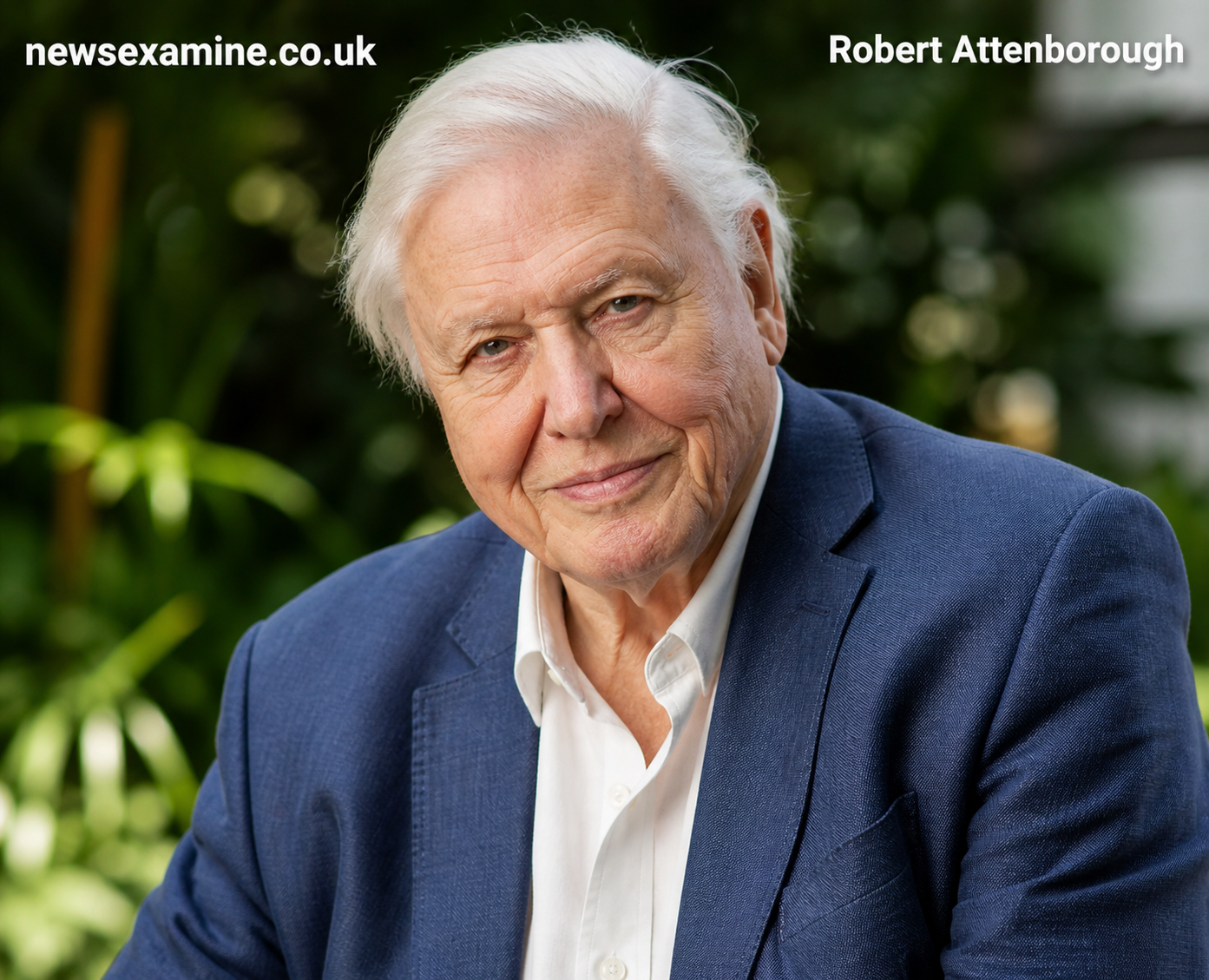
Robert Attenborough is a British biological anthropologist known for his research on human evolution, population biology and health in different environments. He has held academic roles at the University of Cambridge and the Australian National University (ANU), and his field research in Papua New Guinea has helped scientists understand how human populations adapt to disease, climate and nutrition. He is the son of Sir David Attenborough, the natural historian, and the nephew of actor and filmmaker Richard Attenborough — but unlike them, he built his career in university research rather than in front of a camera.
People searching for “Robert Attenborough biography” usually want to know three things: who he is, what he studied, and how he is connected to the famous Attenborough family. This article answers all three from verified academic and publication records, and says plainly where the facts stop — including his net worth, for which no reliable figure exists.
Key Takeaways
- Robert Attenborough is a British biological anthropologist specialising in human evolution, population biology and health.
- He is the son of Sir David Attenborough and the nephew of Richard Attenborough, but his career has been academic, not media-based.
- His affiliations have included the University of Cambridge and the Australian National University (ANU).
- His field research centres on Papua New Guinea, one of the most genetically and culturally diverse regions in the world.
- He co-authored a 2017 study in Science on New Guinea’s genetic history and co-edited Human Biology in Papua New Guinea: The Small Cosmos (1993).
- No verified net worth figure exists for him, and this article states none.
Quick Facts
| Detail | What is known |
|---|---|
| Full name | Robert Attenborough |
| Field | Biological anthropology |
| Known for | Research on human evolution, population biology and health |
| Institutions | University of Cambridge; Australian National University (ANU) |
| Key research region | Papua New Guinea |
| Notable publication | Co-author, “A Neolithic Expansion but Strong Genetic Structure in the Independent History of New Guinea”, Science (2017) |
| Notable book | Co-editor, Human Biology in Papua New Guinea: The Small Cosmos (1993) |
| Family | Son of Sir David Attenborough; nephew of Richard Attenborough |
| Public profile | Private, low-profile academic career |
| Net worth | Not verified — no figure stated |
Who Is Robert Attenborough?
Robert Attenborough is a British biological anthropologist whose career has been spent studying how human populations evolve, vary and adapt to different environments. His work sits at the meeting point of biology, genetics and health: he studies how groups of people change physically and biologically over time, and how disease, climate and nutrition shape those changes. Unlike his father, Sir David Attenborough, whose nature documentaries are known around the world, he has worked almost entirely inside universities and research institutions, publishing academic papers rather than appearing on television.
Family Background and the Attenborough Legacy
He comes from one of the most respected intellectual families in the United Kingdom. His father, Sir David Attenborough, became the world’s best-known natural historian, changing how millions of people understand wildlife and the environment. His uncle, Richard Attenborough, became one of Britain’s most honoured actors and film directors. What he took from that environment was not the desire to perform, but the habit of careful observation — the family’s influence, in his case, running through education and curiosity rather than entertainment.
Early Life and Academic Development
Being exposed to scientific discussion and global perspectives from an early age shaped the questions he would spend his career asking: how do human beings differ, why do those differences exist, and how do environments shape them? Instead of following his father into wildlife broadcasting, he developed a deeper interest in human societies, biology and evolution. That interest led him toward anthropology, a field that combines biology, culture and history to understand human development — and to the human species itself as his subject, studied in the classroom, the laboratory and the field.
Academic Career: Cambridge and the Australian National University
He has spent most of his professional life in academia, working at two respected centres for anthropological research. His affiliations have included Biological Anthropology in the Department of Archaeology and Anthropology at the University of Cambridge, and the School of Archaeology and Anthropology at the Australian National University (ANU) in Canberra. The live record also describes him as an Honorary Senior Lecturer at the Australian National University, reflecting long-term involvement in teaching and research. A career built across Cambridge and ANU gave him access to both the British and the Asia-Pacific research traditions, and to the field sites — above all Papua New Guinea — where the questions he studies can actually be answered.
What Is Biological Anthropology?
Biological anthropology is the branch of anthropology that studies human evolution, variation and adaptation. It asks how the human body and human populations have changed over time, and how biology interacts with environment, disease and culture. Where cultural anthropology studies what people believe and how they organise their societies, biological anthropology studies what people are: their genes, their skeletons, their growth and their health. His work on population biology and health is the study of real communities, measured and compared over time, to explain patterns that matter for human survival.
Research Focus: Human Evolution, Population Biology and Health
The main focus of his work is biological anthropology, and within it, three questions recur: how do human populations evolve, how do they vary, and how do they adapt? Human evolution is the long story — the millions of years that shaped the human species. Population biology is the medium story — how groups of people differ in genes, health and physical traits, and why those differences persist. Health is the immediate story — how disease, nutrition and environment affect real people in real places, right now. His research often explores how human populations adapt to environmental challenges such as disease, climate and nutrition.
Field Research in Papua New Guinea
One of the most significant areas of his research is Papua New Guinea. The region is known for its extraordinary genetic and cultural diversity, making it one of the most valuable locations in the world for anthropological study. New Guinea has been occupied by humans for around 50,000 years, and its peoples speak hundreds of distinct languages — a diversity that preserves a record of human history found almost nowhere else. His studies there focus on population biology, health patterns and genetic variation. This work has helped provide insights into how diseases, especially malaria, interact with human populations, and into how long-term adaptation works in specific ecological settings.
The 2017 Science Study: New Guinea’s Genetic History
His best-documented scientific contribution is as a co-author of a 2017 study published in the journal Science, titled “A Neolithic Expansion but Strong Genetic Structure in the Independent History of New Guinea”. The study analysed genome-wide data from 381 individuals across 85 language groups in Papua New Guinea. Its findings were striking: New Guinea’s peoples show a sharp genetic divide between lowland and highland groups that originated between 10,000 and 20,000 years ago, and highland groups show little evidence of mixing with populations from outside New Guinea. The study also confirmed that New Guinea was settled around 50,000 years ago and that its people adopted plant cultivation independently around 10,000 years ago.
Books and Scientific Publications
He has contributed to academic publications across several decades, usually in collaboration with scientists from other disciplines such as genetics, archaeology and epidemiology. His best-known editorial work is Human Biology in Papua New Guinea: The Small Cosmos, published by Oxford University Press in 1993 and co-edited with Michael P. Alpers. The volume brought together research on the population biology of the region and remains a reference point for the field. He also co-edited Papuan Pasts: Cultural, Linguistic and Biological Histories of Papuan-speaking Peoples, published in 2005. In addition, he contributed a chapter, “Health changes in Papua New Guinea: from adaptation to double jeopardy?”, to the Cambridge University Press volume Health Change in the Asia-Pacific Region.
How He Differs from David and Richard Attenborough
The simplest way to understand him is to see how he differs from the two Attenboroughs most people already know. Sir David Attenborough communicates science to the public: his documentaries translate the natural world into stories that millions of people watch and remember. Richard Attenborough communicated through cinema: as an actor and director he told human stories on screen, winning major awards for his work in film. Robert Attenborough, by contrast, produces science itself rather than communicating it. His audience is other researchers; his medium is the academic paper, the edited volume and the university lecture.
Why His Work Matters in Modern Anthropology
His research matters to modern anthropology because the questions it addresses have become more urgent, not less. Climate change is shifting disease patterns and food supplies; populations are moving at a scale not seen before; and genetic medicine is making it possible to read individual risk from DNA. Each of these developments depends on the kind of baseline knowledge his work provides: how human populations actually vary, how they have adapted to local conditions over thousands of years, and what happens to health when those conditions change quickly. Anthropology is not only the study of the past: it is one of the tools societies need to make sense of a changing present.
Conclusion
He represents a different but equally important side of the Attenborough legacy. While his family is widely known for public storytelling and media influence, he has contributed through academic research and scientific study. His work in biological anthropology — at Cambridge and the Australian National University, and in the field in Papua New Guinea — has helped expand knowledge about human evolution, health and adaptation. His co-authorship of the 2017 Science study on New Guinea’s genetic history and his editorial work on Human Biology in Papua New Guinea: The Small Cosmos give that contribution a permanent, verifiable record.
Frequently Asked Questions
Who is Robert Attenborough?
Robert Attenborough is a British biological anthropologist known for his research on human evolution, population biology and health. He has worked at the University of Cambridge and the Australian National University, and his field research in Papua New Guinea has shaped scientific understanding of human adaptation.
Is Robert Attenborough related to David Attenborough?
Yes. Robert Attenborough is the son of Sir David Attenborough, the natural historian and broadcaster. He is also the nephew of actor and filmmaker Richard Attenborough, David’s brother.
What does Robert Attenborough study?
He studies biological anthropology — human evolution, population biology, genetic variation and health in different environments. His work focuses on how human populations adapt to disease, climate and nutrition over time.
Where did Robert Attenborough work?
His academic affiliations have included Biological Anthropology at the University of Cambridge and the School of Archaeology and Anthropology at the Australian National University (ANU) in Canberra.
What did Robert Attenborough research in Papua New Guinea?
In Papua New Guinea, he studied population biology, health patterns and genetic variation. His work there examined how isolated communities evolve over time and how diseases, especially malaria, interact with human populations.
What books has Robert Attenborough written or edited?
He co-edited Human Biology in Papua New Guinea: The Small Cosmos (Oxford University Press, 1993) with Michael P. Alpers, and co-edited Papuan Pasts (2005). He also co-authored a 2017 study on New Guinea’s genetic history published in Science.
Is Robert Attenborough famous like his father?
No. Unlike Sir David Attenborough, he has built a private, low-profile academic career. His audience is other researchers, and his work appears in academic papers and edited volumes rather than on television.
What is Robert Attenborough’s net worth?
No verified net worth figure exists for Robert Attenborough. He is an academic researcher, not a public media figure, and no reliable source states a net worth figure — so this article states none.
Newsexamine brings you clear, verified profiles of the public figures and researchers people are searching for, saying plainly what is verified and what is not.
