

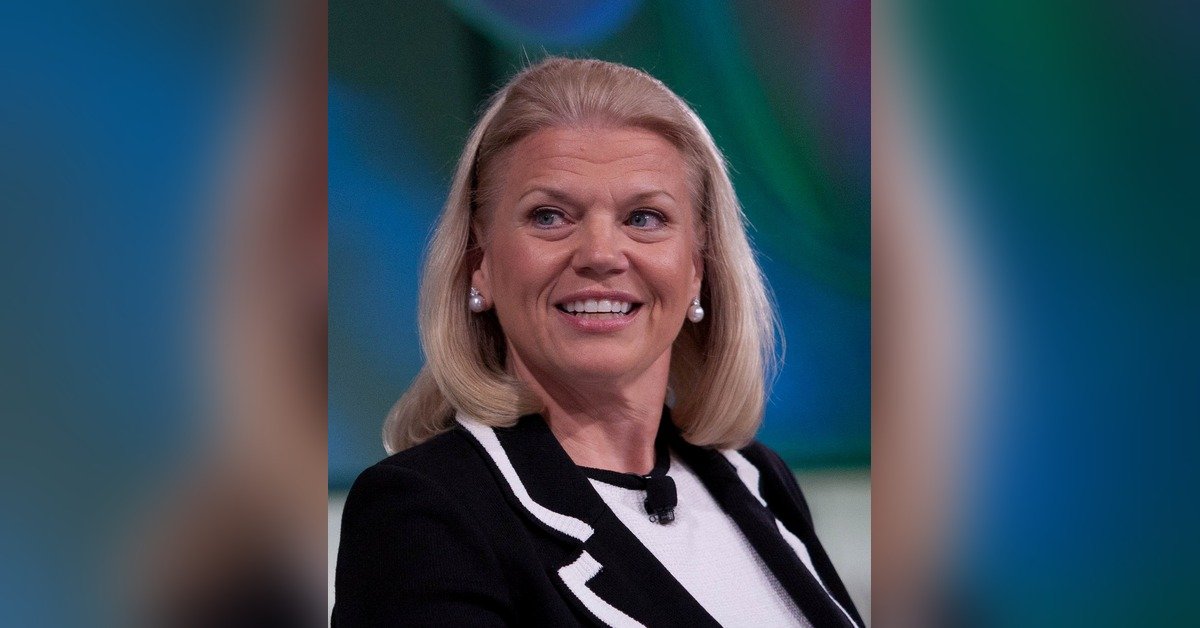
Ginni Rometty and Evan Spiegel: Two Generations of Technology Leadership
Ginni rometty and evan spiegel represent two opposite routes to the top of the technology industry. Rometty spent almost four decades inside one company, rising from systems engineer to become the first woman to lead IBM. Spiegel built a company from a university project, became a billionaire in his twenties, and still leads the business he co-founded. They have no verified joint project, partnership or personal relationship. The only narrow shared fact found during research is that both were announced among the first speakers for the VivaTech fifth anniversary edition scheduled for June 2020 — a shared speaker billing, not a collaboration. What makes the pairing worth reading is what it reveals about how technology leadership itself has changed: from the long corporate climb to the founder-led startup, and from enterprise computing to the consumer internet.
Who Is Ginni Rometty?
Ginni Rometty, born Virginia Marie Nicosia on 29 July 1957 in Chicago, is an American business executive best known as the former chairman, president and chief executive officer of IBM. She grew up as the eldest of four children in an Italian-American family, and after her parents’ divorce she took on significant responsibility at home while still at school. She studied at Northwestern University on a General Motors scholarship, graduating with high honours in 1979 with a degree in computer science and electrical engineering.
Rometty worked briefly at General Motors before joining IBM in 1981 as a systems engineer. Over the following three decades she moved through technical, sales, marketing and strategy roles, including senior vice president of global business services and senior vice president of sales and distribution. As general manager of IBM Global Services, she helped negotiate and then integrate IBM’s purchase of PricewaterhouseCoopers’ IT consulting business in 2002, one of the largest professional-services deals of its time and a defining early test of her leadership.
Ginni Rometty as IBM’s First Female CEO
Rometty became president and chief executive officer of IBM in January 2012, and later chairman, becoming the first woman to head the company in its then more than 100-year history. Her strategy was to reposition IBM away from lower-value hardware towards higher-value areas: analytics, cloud computing, cognitive computing and, later, hybrid cloud, artificial intelligence, quantum computing and blockchain. IBM’s own account of her tenure says she reinvented more than half of IBM’s portfolio, built a hybrid cloud business described at different times as worth $21 billion or $25 billion depending on the source and year, and oversaw 65 acquisitions, including Red Hat in 2019 for around $34 billion, the largest acquisition in IBM’s history.
She also made technology ethics and workforce skills a public part of her leadership. She argued for responsible stewardship of data and artificial intelligence, championed so-called “new collar” jobs that value skills over traditional degrees, and supported the growth of P-TECH schools, six-year programmes combining high school, college and workplace experience. She stepped down as CEO on 1 April 2020 and retired from IBM on 31 December 2020 after a career there of nearly 40 years.
The Criticism of Rometty’s IBM Tenure
A fair profile of Rometty must include the criticism, which was fierce. IBM went through a long run of consecutive quarters of revenue decline during her tenure — reported as 22 quarters in some sources and 24 in others, a difference that reflects how the quarters are counted rather than a disagreement that the decline was long. She also faced criticism over executive pay, layoffs and outsourcing, and over whether the shift to cloud and cognitive computing happened fast enough to offset decline elsewhere. Her supporters argue that she repositioned a century-old company for a market that had fundamentally changed, and that the Red Hat acquisition and hybrid cloud strategy only bore full fruit after she left. Her critics argue that shareholders and employees paid too high a price during the transition. Both views are part of the record, and neither should be hidden.
Since leaving IBM, Rometty has written Good Power: Leading Positive Change in Our Lives, Work, and World, published in 2023, serves on boards including JPMorgan Chase, and co-chairs OneTen, an initiative bringing companies together to hire and advance one million Black Americans into family-sustaining jobs over ten years.
Who Is Evan Spiegel?
Evan Thomas Spiegel, born on 4 June 1990 in Los Angeles, California, is an American businessman and the co-founder and chief executive officer of Snap Inc., the parent company of Snapchat. He grew up in Pacific Palisades, attended Crossroads School for Arts and Sciences in Santa Monica, took design classes while still at school, and went on to Stanford University to study product design.
At Stanford, Spiegel worked with Bobby Murphy and Reggie Brown on a class project for an app built around disappearing messages. That project, first called Picaboo, launched in 2011 and became Snapchat. Spiegel left Stanford before graduating to focus on the company full time. The idea was simple and, at the time, unusual: photos and messages that disappear after being viewed, rather than living forever on a public feed. That idea caught on first with young users and then far more widely, and it forced much larger rivals to copy its features.
Evan Spiegel and the Snap Stock Market Listing
Snap Inc. listed on the New York Stock Exchange in March 2017, in one of the most watched technology listings of that year. Spiegel was 26 at the time of the listing, and he had already become, in 2015, the world’s youngest billionaire according to widely reported rankings. He famously turned down a reported $3 billion acquisition offer from Facebook in 2013, a decision that looked reckless at the time and is now often cited as a defining founder gamble.
Under Spiegel, Snap has expanded from a messaging app into a camera and augmented reality company, with products including Snapchat’s lenses and filters, the Snapchat+ subscription service, and Spectacles, its camera glasses. The company has also faced the same pressures as every social platform: competition from much larger rivals, changing advertising markets, and the need to keep growing users while finding new sources of revenue. Spiegel remains chief executive and, with Murphy, controls the company through special voting shares.
Evan Spiegel’s Net Worth: Why It Moves So Much
Evan Spiegel’s fortune is mostly his stake in Snap, so it rises and falls with Snap’s share price. That is why published figures swing so widely over time — from several billion dollars at Snap’s peak to much lower figures when the share price fell, and back up again. Forbes put his net worth at around $2.5 billion in August 2025, and at around $2.4 billion in a real-time estimate dated October 2026. Those figures are estimates, not officially confirmed personal wealth, and they should always be read with their date attached. Spiegel is also married to model Miranda Kerr, whom he married in 2017, and they have three children. His personal life is far more public than Rometty’s, largely because of the consumer brand he leads and his marriage to a well-known public figure.
What Connects Ginni Rometty and Evan Spiegel?
The verified connection is narrow. Both Ginni Rometty and Evan Spiegel were announced among the first speakers for the VivaTech fifth anniversary edition scheduled for June 2020. That is a shared speaker billing at a large technology conference, not a collaboration, a meeting, a deal or a working relationship, and this article does not claim more than that. Beyond that billing, what connects ginni rometty and evan spiegel is the theme of technology leadership itself: one built a career inside a century-old company, the other built a company from a university project.
Comparing Ginni Rometty and Evan Spiegel
| Detail | Ginni Rometty | Evan Spiegel |
|---|---|---|
| Full name | Virginia Marie Rometty | Evan Thomas Spiegel |
| Born | 29 July 1957, Chicago, Illinois, USA | 4 June 1990, Los Angeles, California, USA |
| Education | Northwestern University, computer science and electrical engineering | Stanford University, product design (left before graduating to build Snapchat) |
| Known for | First woman to lead IBM; chairman, president and CEO, 2012-2020 | Co-founder and CEO of Snap Inc., parent company of Snapchat |
| Breakthrough | Leading IBM’s global services business and the integration of PricewaterhouseCoopers’ consulting arm | Co-founding Snapchat in 2011; Snap’s stock market listing in 2017 |
| Leadership style | Corporate transformation, ethics and workforce skills | Founder-led product design, camera and augmented reality |
| Estimated net worth | Not officially confirmed; no single reliable figure is presented here | Around $2.4 billion to $2.5 billion in Forbes estimates from 2025-2026; moves with Snap’s share price, not officially confirmed |
| After the top job | Author, board member and co-chair of the OneTen workforce initiative | Still CEO of Snap Inc. |
The contrast between Rometty and Spiegel is the real story of this pairing. Rometty’s authority came from time served: nearly 40 years inside IBM, a deep understanding of enterprise customers, and a strategy built on transforming an existing giant. Spiegel’s authority came from invention: a product idea developed at university, a company built around it, and a willingness to refuse a takeover and bet on independence.
That contrast is the heart of comparing ginni rometty and evan spiegel. Their companies reflect that difference. IBM sells complex technology and services to businesses and governments, where deals take months and relationships last years. Snap sells attention and creativity tools to hundreds of millions of consumers, where a single product change can be copied by a rival within weeks. Rometty had to manage decline in some businesses while growing others, and to explain that trade-off to shareholders quarter after quarter. Spiegel has had to manage growth, competition and the volatility of a consumer platform, where user numbers and advertising revenue can change direction quickly.
Their leadership lessons also differ. Rometty’s career is often cited for persistence, ethics and the idea that leadership means deciding what should stay the same as much as what should change — a line she herself used about transformation. Spiegel’s career is often cited for product instinct, design obsession and founder control: the belief that the person who imagined the product should keep deciding its direction. Neither model is obviously better; each fits the company and the moment that produced it.
Are Ginni Rometty and Evan Spiegel Related?
No verified business partnership, investment, joint project or personal relationship between them was found. The one documented overlap is narrow and should not be overstated: both were announced among the first speakers for the VivaTech fifth anniversary edition, scheduled for 11 to 13 June 2020 in Paris. Speaker lists at large technology conferences routinely include dozens of chief executives from different companies, and appearing on the same announced list is not evidence of a meeting, a conversation or a collaboration. No record was found that they worked together, invested in each other’s companies, or shared a board or business venture. Readers who see claims of a deeper “real connection” between them should ask what specific event, deal or document is being cited — because in the sources checked for this article, none was.
Why Are Ginni Rometty and Evan Spiegel Searched Together?
Like many paired searches, this one appears to be driven by curiosity and by other websites publishing paired profiles, rather than by a news event. People may wonder whether two prominent technology leaders from different generations know each other, or they may be researching one of them and encounter the other’s name in a search suggestion. The pairing is also a natural teaching comparison: a student or reader learning about technology leadership gets two complete case studies in one search — the corporate transformer and the startup founder. That educational value is real, even though the personal connection is not.
Conclusion
Ginni Rometty and Evan Spiegel show how much technology leadership changed in a single generation. Rometty rose through IBM over almost 40 years, became its first female chief executive, pushed it towards hybrid cloud and artificial intelligence through the Red Hat acquisition, and left a record that mixes genuine transformation with a long period of revenue decline and sharp criticism. Spiegel built Snapchat from a Stanford project, turned down a reported $3 billion offer, took Snap public at 26, and still leads a consumer technology company whose value — and his own estimated fortune — moves with its share price. They share a place on a 2020 conference speaker list and a place in the history of modern technology. They do not share a business, a project or a personal connection, and this article does not pretend otherwise. That honesty is the point: the comparison is interesting precisely because the two careers are so different.
Frequently Asked Questions
Are Ginni Rometty and Evan Spiegel business partners?
No. No verified partnership, joint project, investment or business deal between them was found. Both were announced as speakers for the same VivaTech event in 2020, which is a shared speaker billing, not a collaboration.
Who is Ginni Rometty?
Ginni Rometty is the former chairman, president and CEO of IBM, serving as CEO from 2012 to 2020. She was the first woman to lead IBM, joined the company as a systems engineer in 1981, and led its shift towards hybrid cloud and artificial intelligence, including the Red Hat acquisition.
Who is Evan Spiegel?
Evan Spiegel is the co-founder and CEO of Snap Inc., the parent company of Snapchat. He co-founded Snapchat at Stanford in 2011, took Snap public in 2017, and remains its chief executive.
What is Evan Spiegel’s net worth?
There is no officially confirmed figure. Forbes estimated it at around $2.5 billion in August 2025 and around $2.4 billion in a real-time estimate in October 2026. Because most of his wealth is Snap stock, the figure moves with the share price.
What is Ginni Rometty’s net worth?
No single officially confirmed figure is presented here. Unlike Spiegel, whose wealth is tied to a listed company stake that trackers can estimate from filings, Rometty’s personal wealth is not publicly documented in a reliable, dated estimate, so this article does not invent one.
Why was Ginni Rometty’s time at IBM controversial?
IBM experienced a long run of consecutive quarters of revenue decline during her tenure, and she faced criticism over executive pay, layoffs and outsourcing, even as supporters credit her with repositioning IBM towards hybrid cloud and AI and completing the Red Hat acquisition.
Did Ginni Rometty and Evan Spiegel ever meet?
No verified meeting between them was found. Being announced on the same conference speaker list is not proof of a meeting, and this article does not claim one took place.
For more articles like this, visit Newsexamine.
